


How to read books in a foreign language
Choose a book in which you already know about 98 of every 100 words: research suggests that is roughly where most learners can follow a story without a dictionary. Then check how many hours the book will take at your speed, and decide before you start what you will do with the words you don’t know.
Easiest English books
Ranked by how much vocabulary they ask for


Classics you can finish
Famous books in English, easiest first
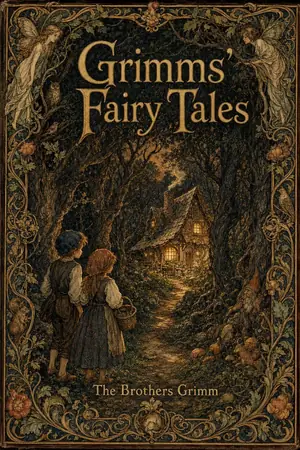 Grimms’ Fairy Tales
 Short Science Fiction
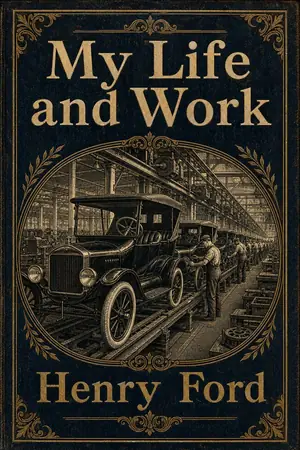 My Life and Work
 The Picture of Dorian Gray
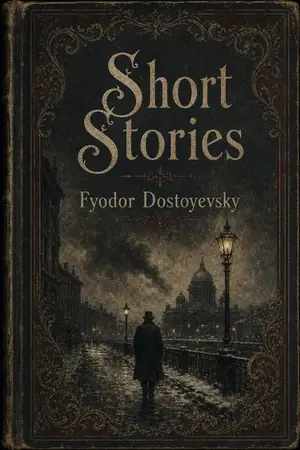 Short Stories
 The Memoirs of Sherlock Holmes
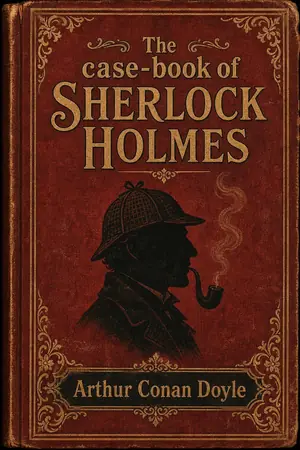 The Case-Book of Sherlock Holmes
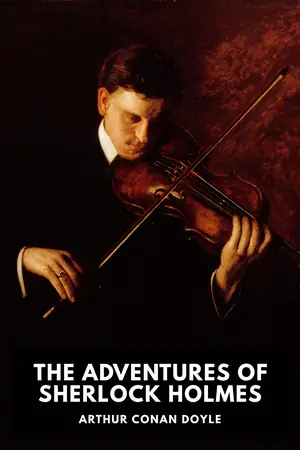 The Adventures of Sherlock Holmes
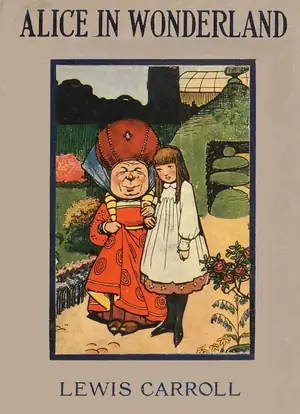 Alice’s Adventures in Wonderland
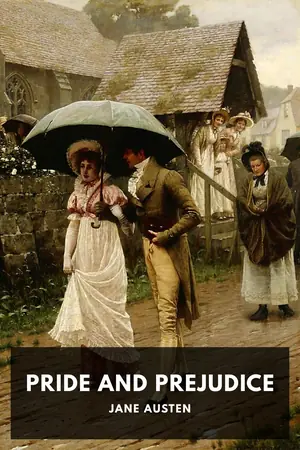 Pride and Prejudice
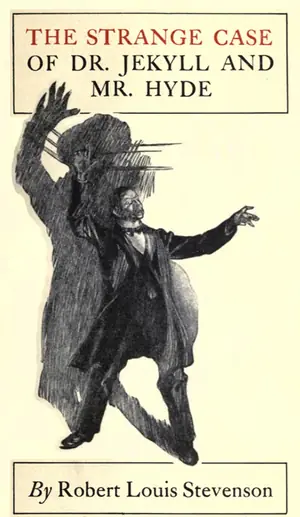 The Strange Case of Dr. Jekyll and Mr. Hyde
 Crime and Punishment
 Dracula
 The Great Gatsby
Start in Spanish, French, German or Italian
The three easiest books in each language
 Un suceso en el puente sobre el río Owl
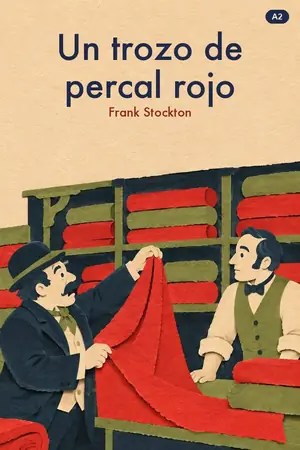 Un trozo de percal rojo
 Después de veinte años
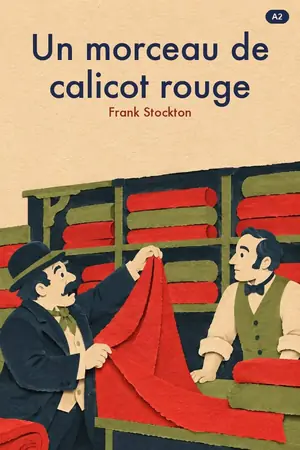 Un morceau de calicot rouge
 Ce qui se passa sur le pont de Owl Creek
 Au bout de vingt ans
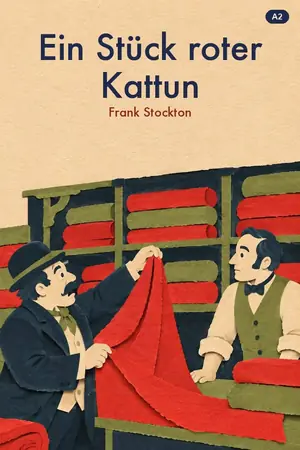 Ein Stück roter Kattun
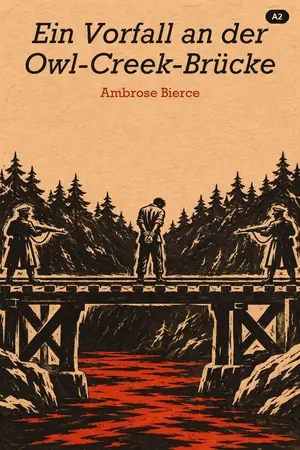 Ein Vorfall an der Owl-Creek-Brücke
 Nach zwanzig Jahren
 Un pezzo di cotone rosso
 Accadde al ponte di Owl Creek
 Dopo vent’anni
B1 · Intermediate
21 free English books
B2 · Upper intermediate
19 free English books






C1 · Advanced
11 free English books







Browse by level
Start one level below yours
What a page feels like when you know
Mara found the old bicycle behind her grandmother’s house on the first warm day of spring. The tyres were flat, the chain was brown with rust, and a bird had built a nest in the basket. She carried it into the yard and cleaned it slowly with a wet cloth. Her grandmother watched from the kitchen window and laughed. “I rode that bicycle to school every morning for six years,” she said. “It was never fast, but it always brought me home.” By evening the chain was clean, the tyres were full of air, and Mara was ready to ride.
100 words
The highlighted words are invented, the way Hu and Nation built their test: a real word is replaced with a nonword so that nobody can know it in advance. On a page of 250 words, 98% means five unknown words and 90% means twenty-five.
Five steps to your first book
- Know your rough level. Language courses and exams use the six CEFR levels, from A1, the first, to C2, the highest. If you have never been tested, the Council of Europe’s self-assessment grid describes what a reader can do at each level. Then look at books one level below yours.
- Test a page, not the cover. Open the book in the middle, read one page and count the words you don’t know. Up to five on a 250-word page is about 98%, and for easy reading in quantity the advice is three or four at most. A dozen or more means you will need a dictionary often. The details are on Is this book right for my level?
- Check the length. Divide the number of words by your reading speed. A 50,000-word novel at 150 words per minute takes about 5.5 hours; at 100 words per minute, more than 8. For a first book, shorter is better: how to estimate reading time.
- Choose a graded reader or an original. Graded readers are written with a limited vocabulary for each level, which makes the 98% target reachable much earlier. Originals are what you are working towards: which graded reader series match your level, how to choose between graded readers and originals, and where to find graded readers for free.
- Decide what to do with unknown words. Looking up every word kills the story; ignoring every word means you miss the ones that matter. A simple rule for which words to look up, and which tools make it quick, is on Reading with a dictionary.
Free books sorted by level
We keep a table of 192 public-domain books in five languages, each with its CEFR level, word count, number of different words and reading time, and a link to a free copy.
The numbers behind this advice
Every page on this site rests on a handful of numbers. Here they are with their sources and their limits.
| Question | Rule of thumb | Where it comes from |
|---|---|---|
| How many words must I know to follow a story without help? | About 98%, one unknown word in 50 | An estimate from one study of 66 learners (Hu and Nation 2000) |
| How many to read with some support? | About 95%, one in 20 | A study of 745 students reading academic texts (Laufer and Ravenhorst-Kalovski 2010) |
| How many unknown words per page for easy reading in quantity? | No more than 3 or 4 | Advice from extensive reading specialists (Nation and Waring 2013) |
| How many words does an English novel need? | 8,000–9,000 word families for 98% | Counts from word lists, not tests with readers (Nation 2006) |
| How fast do native speakers read? | About 260 words per minute for fiction | A review of 190 studies (Brysbaert 2019) |
| How fast do learners read easy books? | Roughly 60–140 words per minute | Studies of university students in Japan (see the table) |
| How often must I meet a word to learn it? | Around ten times, varying by word | Experiments and a review of 26 studies (Webb 2007; Uchihara et al. 2019) |
| Does reading a lot of easy books help? | Yes: small to medium gains in reading | Two meta-analyses of 34 and 49 studies (Nakanishi 2015; Jeon and Day 2016) |
Who writes this site and where the data comes from: About.